
Packaging
What makes good packaging design?
How shelf impact, information hierarchy, range consistency and production detail work together.
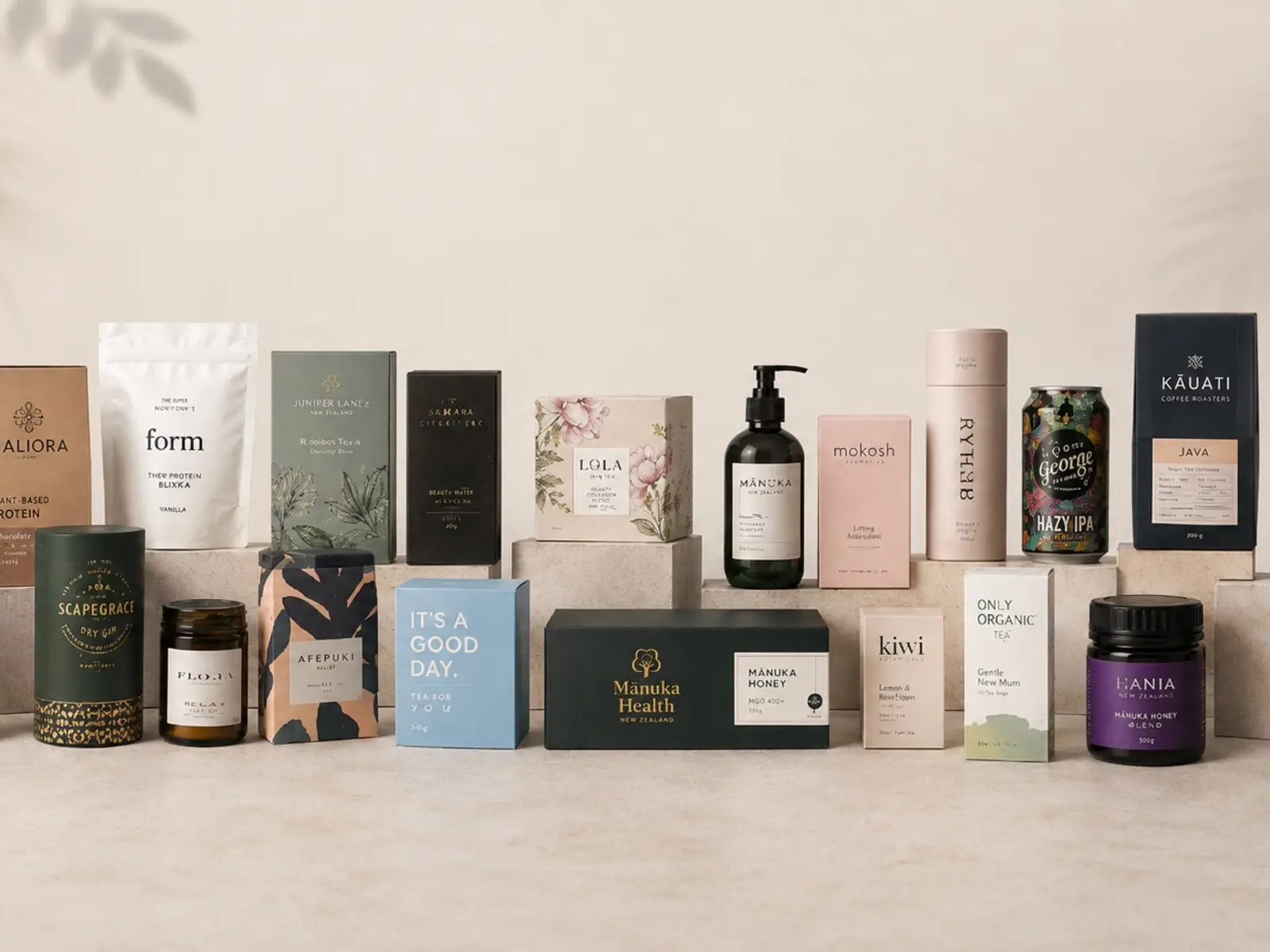
Good packaging balances shelf impact, clear information, brand consistency, production detail and a memorable customer experience. For Auckland and New Zealand businesses, the strongest design decisions are the ones that connect brand clarity, customer confidence, production detail and the next action a customer should take.
Shelf impact and clear hierarchy
Good packaging design must do two jobs at once: attract attention and make the product easy to understand. On a shelf, in an online store or in a buyer presentation, customers should quickly recognise the product type, flavour, benefit, size and brand. Strong hierarchy helps the eye move from brand to product name, then to supporting details. Colour, typography, image style and spacing all matter because packaging often has only a few seconds to create confidence.
Production detail matters
Packaging is not only a visual exercise. It must respect dielines, barcode spacing, label materials, print finishes, colour behaviour, safe zones and supplier requirements. A beautiful design can fail if it does not print well, wrap correctly, leave room for legal copy or allow future product variations. This is why packaging design benefits from production knowledge. The artwork should be ready for real suppliers, not only attractive in a mockup.
Design for a product family
Strong packaging should be able to grow with the product range. A single label or box may be the first step, but food, beverage, skincare and retail brands often add more flavours, sizes or product lines later. The design system should make each SKU distinct while keeping the brand recognisable. Consistent layout rules, colour logic, naming hierarchy and product imagery make future packaging faster, clearer and more professional.
Common packaging mistakes to avoid
Packaging often becomes weaker when too many messages fight for attention. A front panel can quickly become crowded with benefits, icons, claims, photos, flavour names, badges and legal copy. Another mistake is designing a beautiful single pack without thinking about how the range will expand. New flavours, sizes and formats can become messy if there is no clear system. It is also risky to approve artwork before checking dielines, barcode placement, supplier notes, colour limits and mandatory information. Good packaging design is creative, but it is also disciplined.
How to judge packaging success
Successful packaging should help the product feel easier to choose. It should make the brand recognisable, make the product type obvious, make the key benefit or flavour easy to read and feel appropriate for the price point. In a New Zealand retail or ecommerce setting, the packaging also needs to photograph well, support wholesale presentations and feel consistent when customers see multiple products together. Even without exact sales numbers, stronger shelf presence, cleaner hierarchy and a more premium product impression are useful signs that the design is working.
What to prepare before briefing a packaging designer
A strong packaging brief should include product dimensions, supplier templates, existing brand files, mandatory information, barcode details, flavour or range plans, photography requirements and examples of competitors on the same shelf. It also helps to explain where the product will be sold: local markets, supermarkets, online stores, wholesale presentations or export channels. The more practical information you provide, the easier it is to design packaging that looks premium and can move through production without unnecessary delays or costly redraws.
Auckland and New Zealand context
Local businesses often compete on trust before price. A customer might compare several Auckland studios, websites, packaging examples or signage suppliers before making contact. Strong creative work should therefore help the business look established, explain its offer clearly and support both search visibility and real-world customer decisions. Vivid Icon brings brand, website, packaging, print and signage thinking together so each project can work beyond a single screen or file.
What to prepare before starting
Before asking for a quote, gather the practical details that will shape the scope. Useful information includes your current website or brand files, examples of competitors, any existing photography, product details, page lists, print sizes, packaging supplier information, signage locations, launch dates and the main customer action you want to improve. A budget range is also helpful because it shows whether the project should be a lean starting point, a more complete system or a staged rollout.
How Vivid Icon approaches the work
Our approach is to connect creative quality with practical delivery. That means thinking about how the work will look, how it will be used, who needs to maintain it and how customers will respond. A logo should work on a sign and a social profile. A website should be easy to understand and ready for search. Packaging should look premium and still respect print requirements. The strongest projects are not isolated assets; they become a clear system the business can keep using.
Useful next steps
If you are planning a project, review the pages below, gather examples of what feels right, and prepare any existing brand files, website links, product information or supplier details. A clearer starting point makes the recommendation sharper.
Quick checklist before you brief the project
- Write down the business goal and the customer action you want to improve.
- Gather current brand files, website links, product details, photos and supplier notes.
- List the pages, packaging sizes, print pieces or signage areas that need design attention.
- Share your preferred timeline, budget range and examples of what feels right or wrong.
Frequently asked questions
What should packaging design achieve?
Good packaging should attract attention, explain the product quickly, feel consistent with the brand and be practical for production.
Do packaging designers need print knowledge?
Yes. Dielines, barcode spacing, colour behaviour, material choice and supplier requirements can affect whether a design prints cleanly.
Can one packaging design support a full range?
Yes. A strong packaging system makes future flavours, sizes and SKUs easier to add while keeping the brand recognisable.
Related service
Packaging Design
Explore the service →See this in practice
HomeMaid packaging
View related work →Working through a similar problem?
Start with the business and the context.
If you are planning a brand, packaging or digital project, Vivid Icon can help define the right approach.